Jumping Spider
Salticidae
Living individuals or members of this group exist today. This does not mean they are safe from extinction.
Jumping spiders hunt with unusually acute vision. This account describes the bold jumping spider (Phidippus audax), a familiar predator in North American fields and gardens.
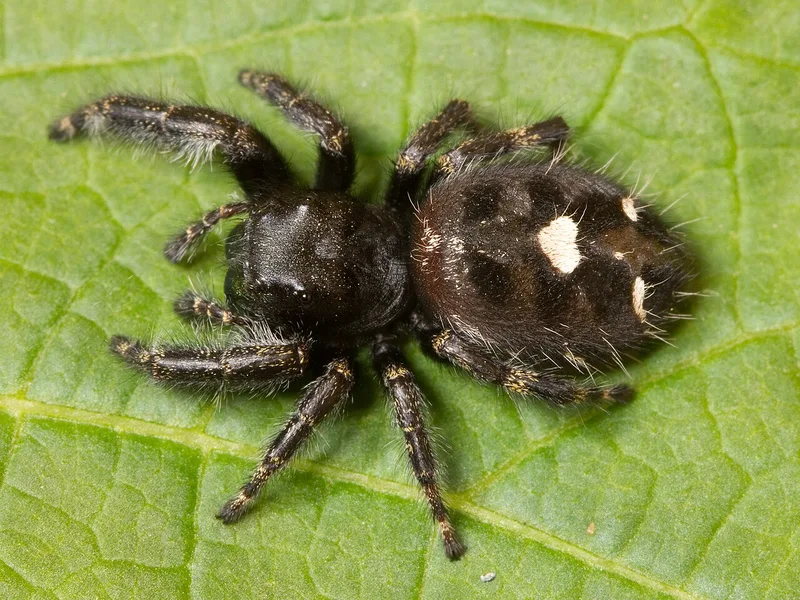
Phidippus audax, the representative described in this account.
At a glance
- Location
- Bold jumping spiders occupy grassland, open woodland, gardens and cultivated areas.
- Habitat
- Grassland, Temperate forest, Towns and cities
- Diet
- Carnivore
- Food
- These spiders stalk insects and other spiders during the day before making a short pounce.
Classification
- Common name
- Jumping Spider
- Browse group
- Arachnids
- Scientific name or taxon
- Salticidae
- Taxon rank
- family
- Order
- Araneae
- Family
- Salticidae
- Source classification
- Arachnida
Taxonomy checked against GBIF. For breeds and hybrids, this describes the listed parent taxon.
Three things to know
- Large front eyes aid hunting.
- It stalks prey in daylight.
- A silk line acts as a safety tether.
Habitat and range
Bold jumping spiders occupy grassland, open woodland, gardens and cultivated areas. They search vegetation and other surfaces rather than relying on a large prey-catching web.
Appearance and adaptations
A compact, hairy body carries several conspicuous eyes, including a large forward-facing pair. The dark abdomen has contrasting pale or orange markings that can vary with age.
Diet and behaviour
These spiders stalk insects and other spiders during the day before making a short pounce. A silk safety line helps secure the spider if a jump misses its target.
Sources
- Animal Diversity Web: Phidippus audax
- A–Z Animals: Jumping Spider · Directory entry
Explore arachnids
Browse all arachnids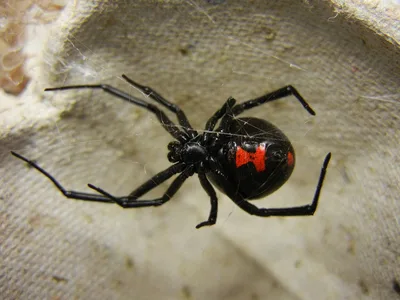
Arachnids
Black Widow Spider
Latrodectus
Black widows include several related spiders.
Living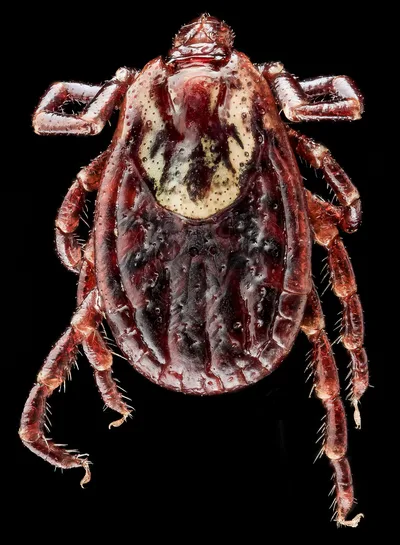
Arachnids
Tick
Ixodida
Ticks are parasitic arachnids rather than insects.
Living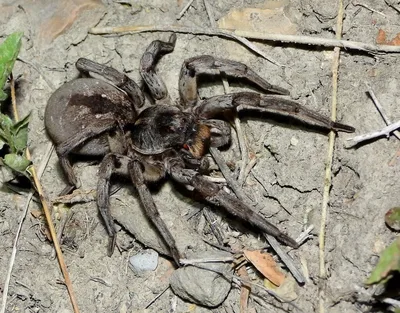
Arachnids
Wolf Spider
Lycosidae
Wolf spiders are ground-hunting arachnids.
Living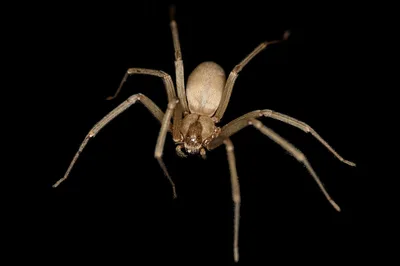
Arachnids
Brown recluse
Loxosceles reclusa
The brown recluse is a small brown spider that spends the day in quiet shelter and searches for insects at night.
Living