Electric ray
Torpediniformes
Living individuals or members of this group exist today. This does not mean they are safe from extinction.
Electric rays have specialised organs that produce electrical discharges. This account follows the Pacific electric ray, a coastal predator that uses electricity when capturing other fishes.
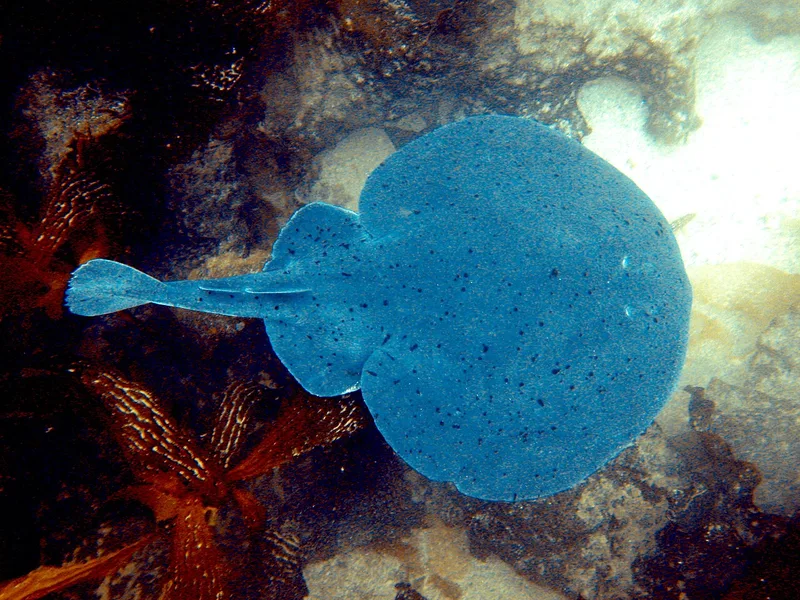
Pacific electric ray (Tetronarce californica), the representative described here.
Derek Stein / California Department of Fish and Wildlife from Sacramento, CA, USA · CC BY
At a glance
- Location
- Tetronarce californica, formerly Torpedo californica, is the representative here. It lives along western North America from British Columbia to Baja California. Sandy bottoms, rocky areas and kelp beds provide habitat.
- Habitat
- Coast
- Diet
- Piscivore
- Food
- The ray feeds on bony fishes.
Classification
- Common name
- Electric ray
- Browse group
- Fish
- Scientific name or taxon
- Torpediniformes
- Taxon rank
- order
- Order
- Torpediniformes
- Source classification
- Elasmobranchii
Taxonomy checked against GBIF. For breeds and hybrids, this describes the listed parent taxon.
Three things to know
- It produces electrical discharges.
- Its first dorsal fin is larger.
- It gives birth to live young.
Habitat and range
Tetronarce californica, formerly Torpedo californica, is the representative here. It lives along western North America from British Columbia to Baja California. Sandy bottoms, rocky areas and kelp beds provide habitat.
Appearance and adaptations
The broad body is grey with scattered dark spots. Two dorsal fins rise behind the disc, the first larger than the second. Electric organs lie within the widened front part of the body.
Diet and behaviour
The ray feeds on bony fishes. It can wait near the bottom or search more actively, using electrical discharges during attacks. Young are born alive rather than hatching from an egg case laid outside the mother.
Sources
- FishBase: Tetronarce californica
- GBIF: Electric ray · Directory entry
Explore fish
Browse all fish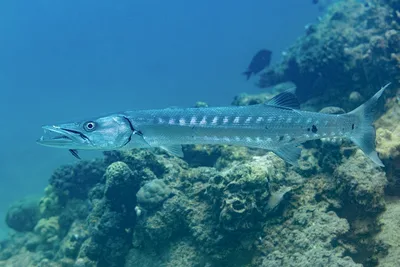
Fish
Barracuda
Sphyraenidae
Barracudas are streamlined predators with conspicuous teeth.
Living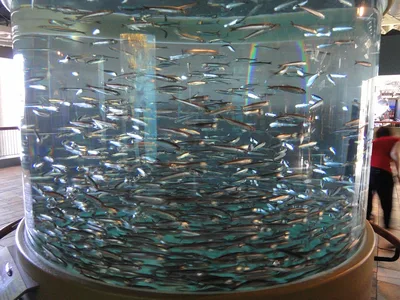
Fish
Anchovy
Engraulidae
Anchovies are small schooling fishes.
Living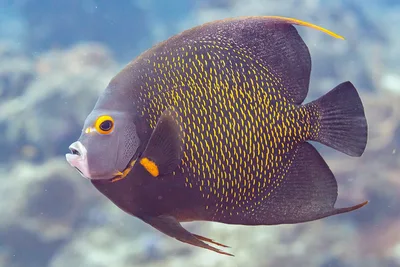
Fish
Angelfish
Pomacanthidae
Marine angelfishes differ from the freshwater aquarium fishes with the same common name.
Living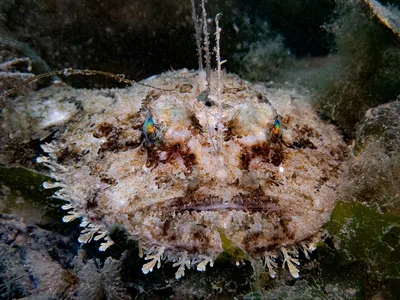
Fish
Anglerfish
Lophiiformes
Anglerfishes include many different marine hunters.
Living