Coral
Anthozoa
Living individuals or members of this group exist today. This does not mean they are safe from extinction.
Corals include many colonial animals. This account describes elkhorn coral (Acropora palmata), whose branching colonies help form shallow Caribbean reefs.
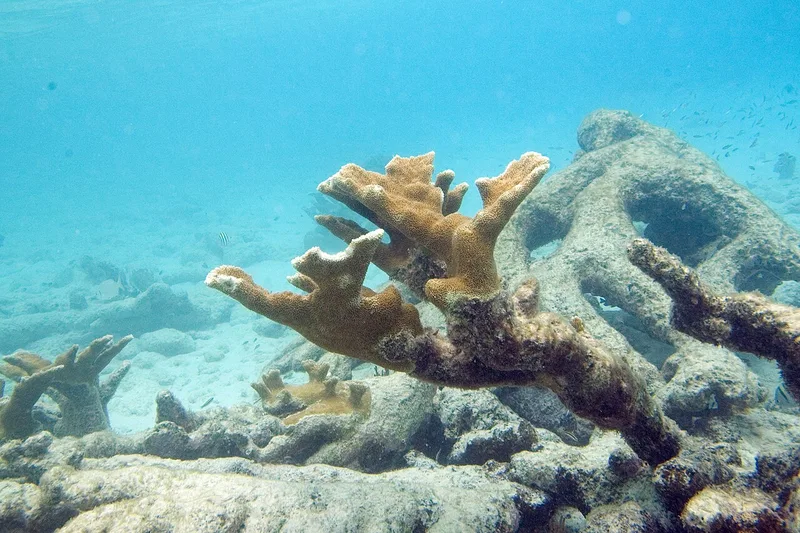
Acropora palmata, the representative described in this account.
At a glance
- Location
- Elkhorn coral grows on warm, shallow reefs in the Caribbean and nearby western Atlantic.
- Habitat
- Coral reef
- Diet
- Omnivore
- Food
- Algae living in the tissues supply much of the colony's energy.
Classification
- Common name
- Coral
- Browse group
- Corals and anemones
- Scientific name or taxon
- Anthozoa
- Taxon rank
- class
- Source classification
- Anthozoa
Taxonomy checked against GBIF. For breeds and hybrids, this describes the listed parent taxon.
Three things to know
- A colony contains many polyps.
- Branches resemble antlers.
- Symbiotic algae supply much of its energy.
Habitat and range
Elkhorn coral grows on warm, shallow reefs in the Caribbean and nearby western Atlantic. Exposed reef crests provide light and moving water around its branches.
Appearance and adaptations
Many small polyps contribute to a shared calcium-carbonate skeleton. Broad, antler-like branches give the colony its name, while symbiotic algae influence its brownish colour.
Diet and behaviour
Algae living in the tissues supply much of the colony's energy. The animal polyps also capture small organisms and particles with their tentacles, so photosynthetic partners and animal feeding both contribute.
Sources
- Animal Diversity Web: Acropora palmata
- A–Z Animals: Coral · Directory entry
Explore corals and anemones
Browse all corals and anemones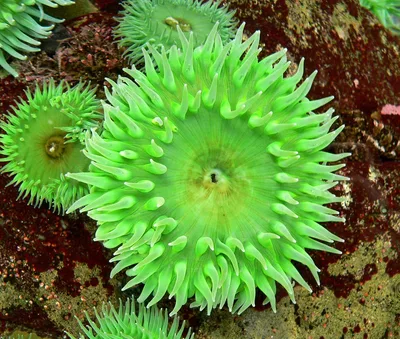
Corals and anemones
Sea Anemone
Actiniaria
Sea anemones are tentacled cnidarians.
Living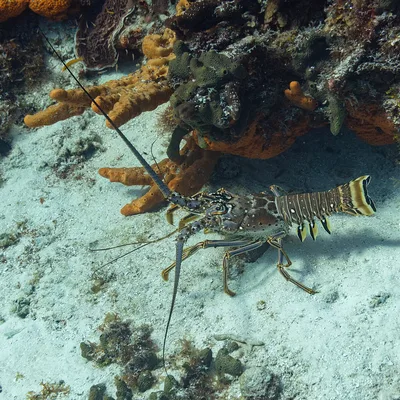
Crustaceans
Spiny lobster
Palinuridae
Spiny lobsters differ from large-clawed lobsters.
Living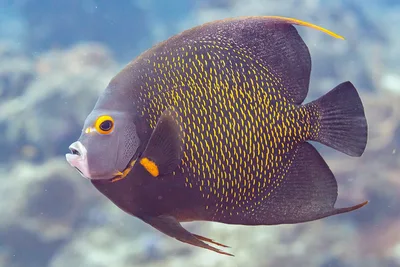
Fish
Angelfish
Pomacanthidae
Marine angelfishes differ from the freshwater aquarium fishes with the same common name.
Living
Fish
Boxfish
Ostraciidae
Boxfishes have unusually rigid bodies.
Living