Camel
Camelus
Living individuals or members of this group exist today. This does not mean they are safe from extinction.
Camels are large dry-country mammals. This account describes the dromedary (Camelus dromedarius), the one-humped domestic species used across arid parts of Africa and Asia.
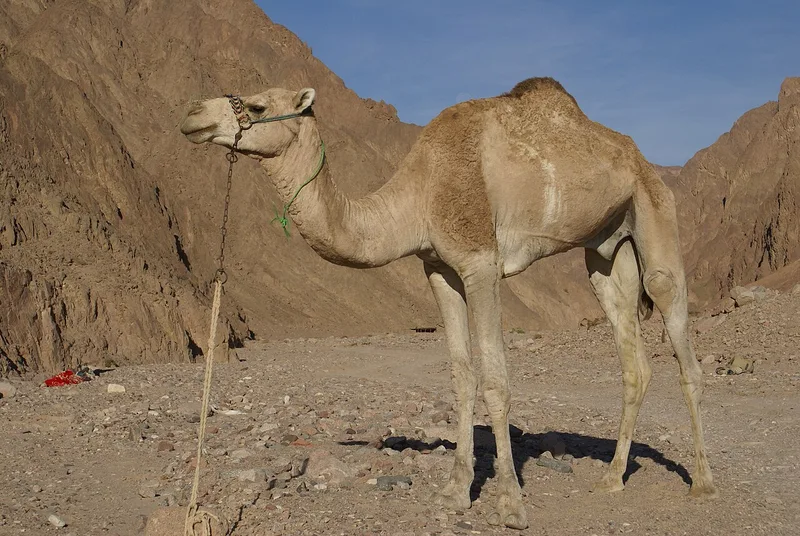
Representative species: Camelus dromedarius.
At a glance
- Habitat
- Desert
- Diet
- Herbivore
- Food
- Dry-country plants.
Classification
- Common name
- Camel
- Browse group
- Mammals
- Scientific name or taxon
- Camelus
- Source classification
- Mammalia
Three things to know
- Its hump contains stored fat.
- The species is predominantly domestic.
- Feral populations occur in Australia.
Habitat and range
Dromedaries are kept in dry regions from northern Africa through the Middle East and into South Asia. Introduced animals also established feral populations in Australia; those are not surviving wild ancestral populations.
Appearance and adaptations
A single hump stores fat rather than water. A long neck and thick lips help the animal reach and handle coarse desert plants.
Diet and behaviour
Shrubs, grasses and other desert vegetation supply food. Animals browse over wide areas and ruminate after feeding. Social groups often contain females and young, while breeding males can become more competitive.
Sources
- Animal Diversity Web: Camelus dromedarius
- A–Z Animals: Camel · Directory entry
Explore mammals
Browse all mammals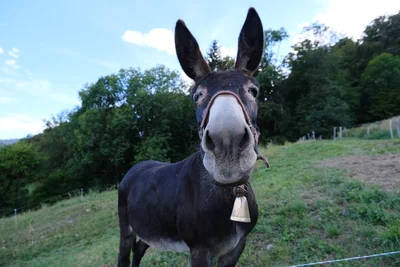
Mammals
Donkey
Equus asinus
The domestic donkey is an herbivorous equid with long ears and sturdy hooves.
Living
Mammals
Dromedary
Camelus dromedarius
The dromedary is the one-humped domestic camel.
Living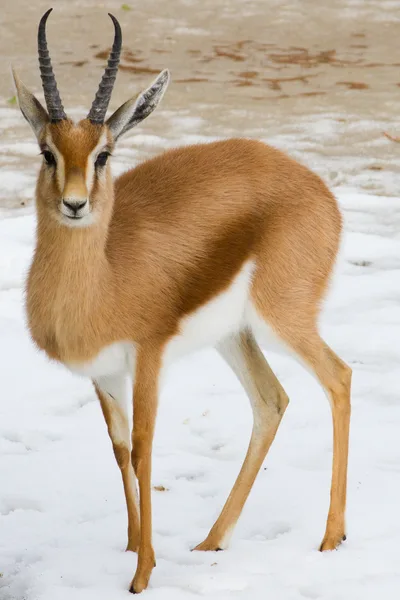
Mammals
Gazelle
Gazella
Gazelles are slender antelopes, but their habitats and ranges differ by species.
Living LC
Mammals
Red fox
Vulpes vulpes
The red fox has the widest range of any wild carnivore.
Living