Caecilian
Gymnophiona
Living individuals or members of this group exist today. This does not mean they are safe from extinction.
Caecilians are limbless amphibians with concealed eyes and sensory tentacles. This account describes the aquatic caecilian Typhlonectes natans, also called a rubber eel, despite belonging to a different animal group from eels.
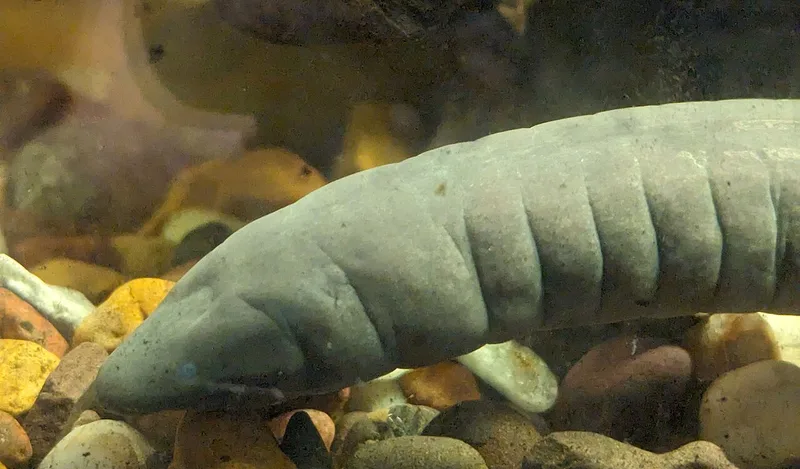
Captive aquatic caecilian (Typhlonectes natans) at Brookfield Zoo, showing the head and front of the body.
At a glance
- Habitat
- Rivers and lakes
- Diet
- Carnivore
- Food
- Worms and other small aquatic animals.
Classification
- Common name
- Caecilian
- Browse group
- Amphibians
- Scientific name or taxon
- Gymnophiona
- Taxon rank
- order
- Order
- Gymnophiona
- Source classification
- Amphibia
Taxonomy checked against GBIF. For breeds and hybrids, this describes the listed parent taxon.
Three things to know
- It is an amphibian rather than an eel.
- Sensory tentacles detect chemical cues.
- Females give birth to live young.
Habitat and range
Typhlonectes natans is native to lowland rivers and streams in Colombia and Venezuela. Unlike many burrowing land-dwelling caecilians, it lives in fresh water and can shelter in sand and leaf litter.
Appearance and adaptations
The elongated dark grey body is smooth and marked by ring-like folds. Small eyes provide limited information, while tentacles near the snout detect chemical cues.
Diet and behaviour
Worms, insect larvae and small fish provide food. After approaching slowly, the animal seizes prey with gripping teeth. It can breathe through the skin and surface for air, and females give birth to live young.
Sources
- Smithsonian National Zoo: Aquatic caecilian
- A–Z Animals: Caecilian · Directory entry
Explore amphibians
Browse all amphibians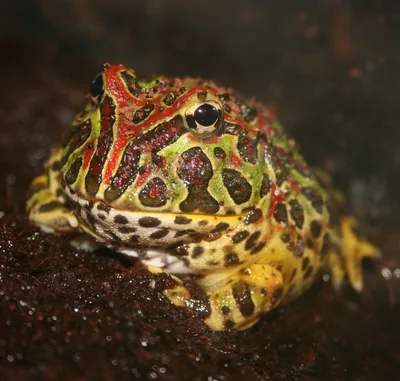
Amphibians
Argentine Horned Frog
Ceratophrys ornata
The Argentine horned frog is a broad-bodied ambush hunter with a very large mouth.
Living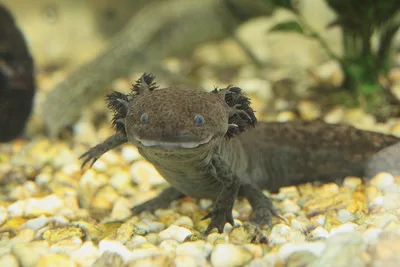 CR
Amphibians
Axolotl
Ambystoma mexicanum
The axolotl is a salamander that never grows up.
Living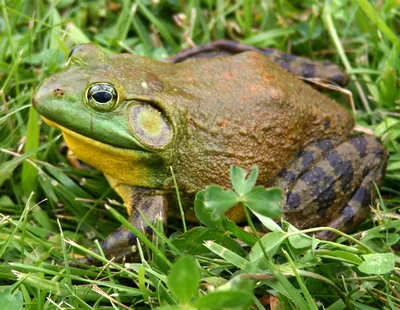
Amphibians
Bullfrog
Lithobates catesbeianus
The American bullfrog is a large frog that waits near water for passing prey.
Living
Amphibians
Fire Salamander
Salamandra salamandra
The fire salamander is a dark European amphibian marked with yellow or orange.
Living