African Bullfrog
Pyxicephalus adspersus
Living individuals or members of this group exist today. This does not mean they are safe from extinction.
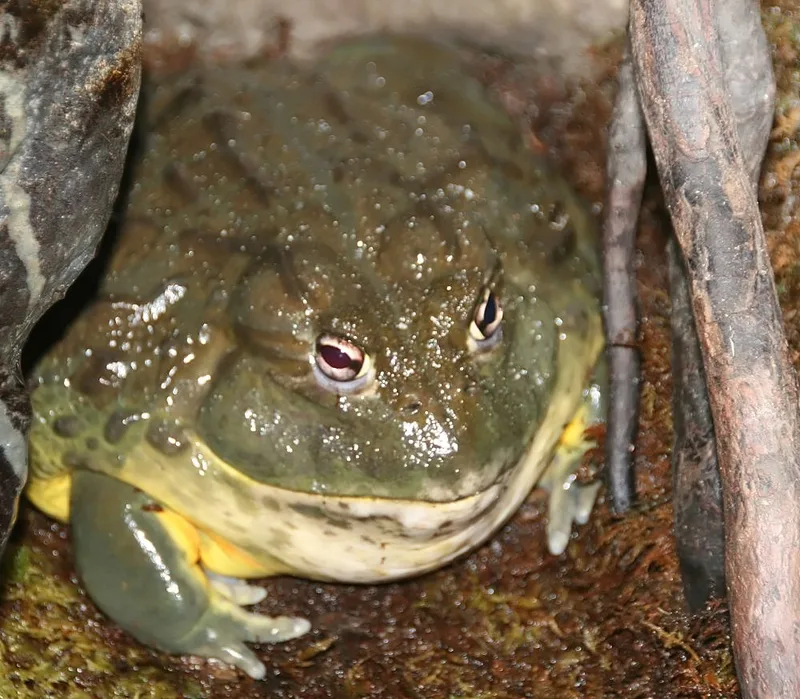
The African bullfrog spends dry periods buried underground and becomes active with rain. It is a powerful predator with a broad mouth.
At a glance
- Location
- Seasonally dry sub-Saharan African landscapes, with temporary water available during rains.
- Habitat
- Savanna, Grassland, Wetlands
- Diet
- Carnivore
- Food
- Invertebrates, frogs and other small animals.
Classification
- Common name
- African Bullfrog
- Browse group
- Amphibians
- Scientific name or taxon
- Pyxicephalus adspersus
- Taxon rank
- species
- Order
- Anura
- Family
- Pyxicephalidae
- Genus
- Pyxicephalus
- Source classification
- Amphibia
Taxonomy checked against GBIF. For breeds and hybrids, this describes the listed parent taxon.
Three things to know
- Males are much larger than females.
- A skin cocoon reduces water loss underground.
- It can eat smaller frogs, including its own species.
Habitat and range
Seasonally dry sub-Saharan African landscapes, with temporary water available during rains.
Appearance and adaptations
Males are much larger than females. Strong hind legs help adults dig, and ridges run along the back of the heavy body.
Diet and behaviour
During dry conditions, shed skin forms a protective cocoon around the buried frog. When active, it takes animals small enough to swallow.
Sources
Explore amphibians
Browse all amphibians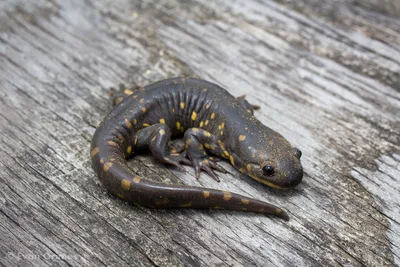
Amphibians
Tiger Salamander
Ambystoma tigrinum
The tiger salamander is a stout North American amphibian with pale markings on a dark body.
Living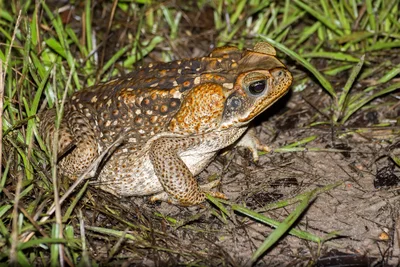
Amphibians
Marine Toad
Rhinella marina
The cane toad, also called the marine toad, is a large American amphibian introduced to several other regions.
Living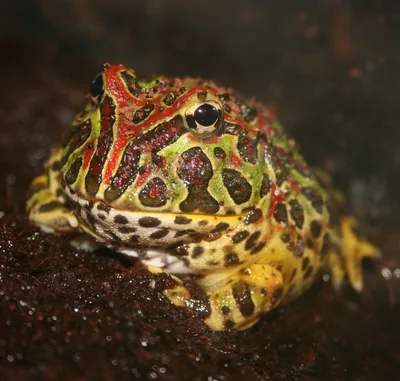
Amphibians
Argentine Horned Frog
Ceratophrys ornata
The Argentine horned frog is a broad-bodied ambush hunter with a very large mouth.
Living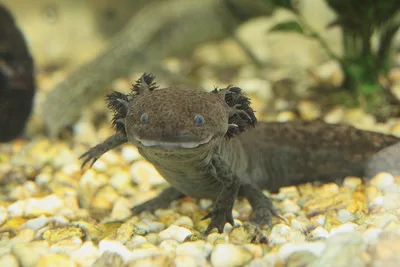 CR
Amphibians
Axolotl
Ambystoma mexicanum
The axolotl is a salamander that never grows up.
Living