Snapping Turtle
Chelydra serpentina
Living individuals or members of this group exist today. This does not mean they are safe from extinction.
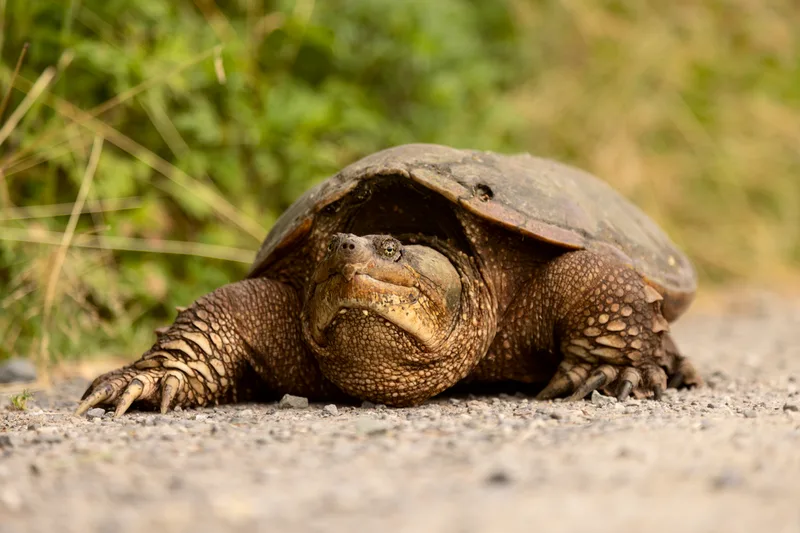
The common snapping turtle is a large freshwater turtle with a powerful jaw and long tail. It spends much of its life concealed in quiet water rather than basking openly.
At a glance
- Habitat
- Rivers and lakes, Wetlands
- Diet
- Omnivore
- Food
- Aquatic vegetation and varied animal foods.
Classification
- Common name
- Snapping Turtle
- Browse group
- Reptiles
- Scientific name or taxon
- Chelydra serpentina
- Taxon rank
- species
- Family
- Chelydridae
- Genus
- Chelydra
- Source classification
- Reptilia
Taxonomy checked against GBIF. For breeds and hybrids, this describes the listed parent taxon.
Three things to know
- Its tail can approach the shell in length.
- The lower shell is relatively small.
- It eats plants as well as animals.
Habitat and range
Common snapping turtles occur across much of southern Canada and the eastern and central United States. Fresh or slightly brackish waters with soft bottoms and vegetation offer concealment.
Appearance and adaptations
A rough shell, large head and long saw-edged tail create a distinctive outline. The small lower shell leaves much of the body exposed compared with many other turtles.
Diet and behaviour
Aquatic plants, invertebrates, fish, carrion and other animals enter the diet. Turtles often remain partly buried with only the head exposed. Although strongly defensive when removed from water, they usually seek aquatic cover when left undisturbed.
Sources
- Animal Diversity Web: Chelydra serpentina
- A–Z Animals: Snapping Turtle · Directory entry
Explore reptiles
Browse all reptiles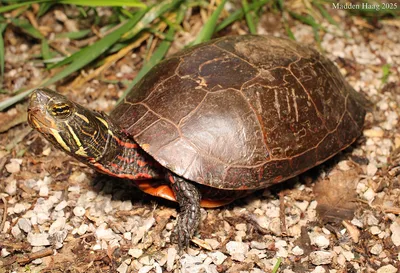
Reptiles
Painted Turtle
Chrysemys picta
The painted turtle is a small freshwater turtle with bright markings around its shell and body.
Living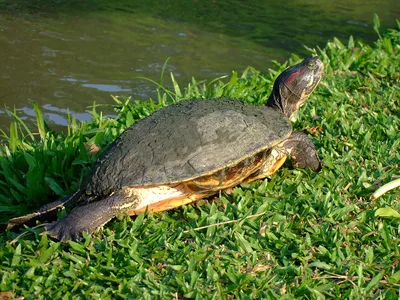
Reptiles
Red-Eared Slider
Trachemys scripta elegans
The red-eared slider is a freshwater turtle named for the reddish patch behind each eye.
Living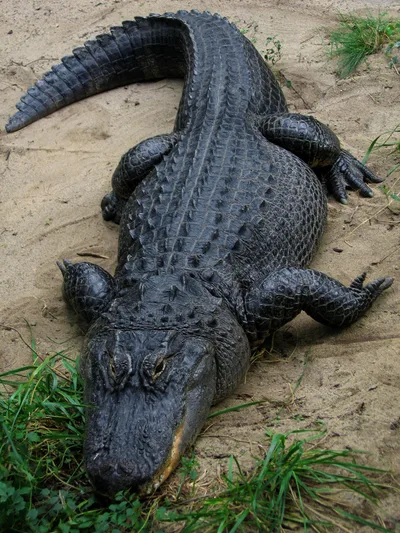
Reptiles
American Alligator
Alligator mississippiensis
The American alligator is a freshwater crocodilian of the southeastern United States.
Living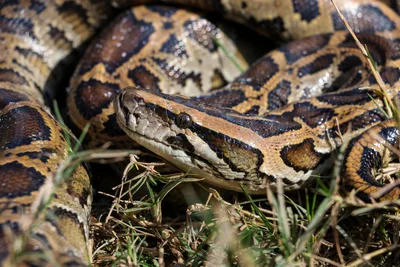
Reptiles
Burmese Python
Python bivittatus
The Burmese python is a large Asian constrictor with dark blotches.
Living