Plesiosaurus
Plesiosaurus
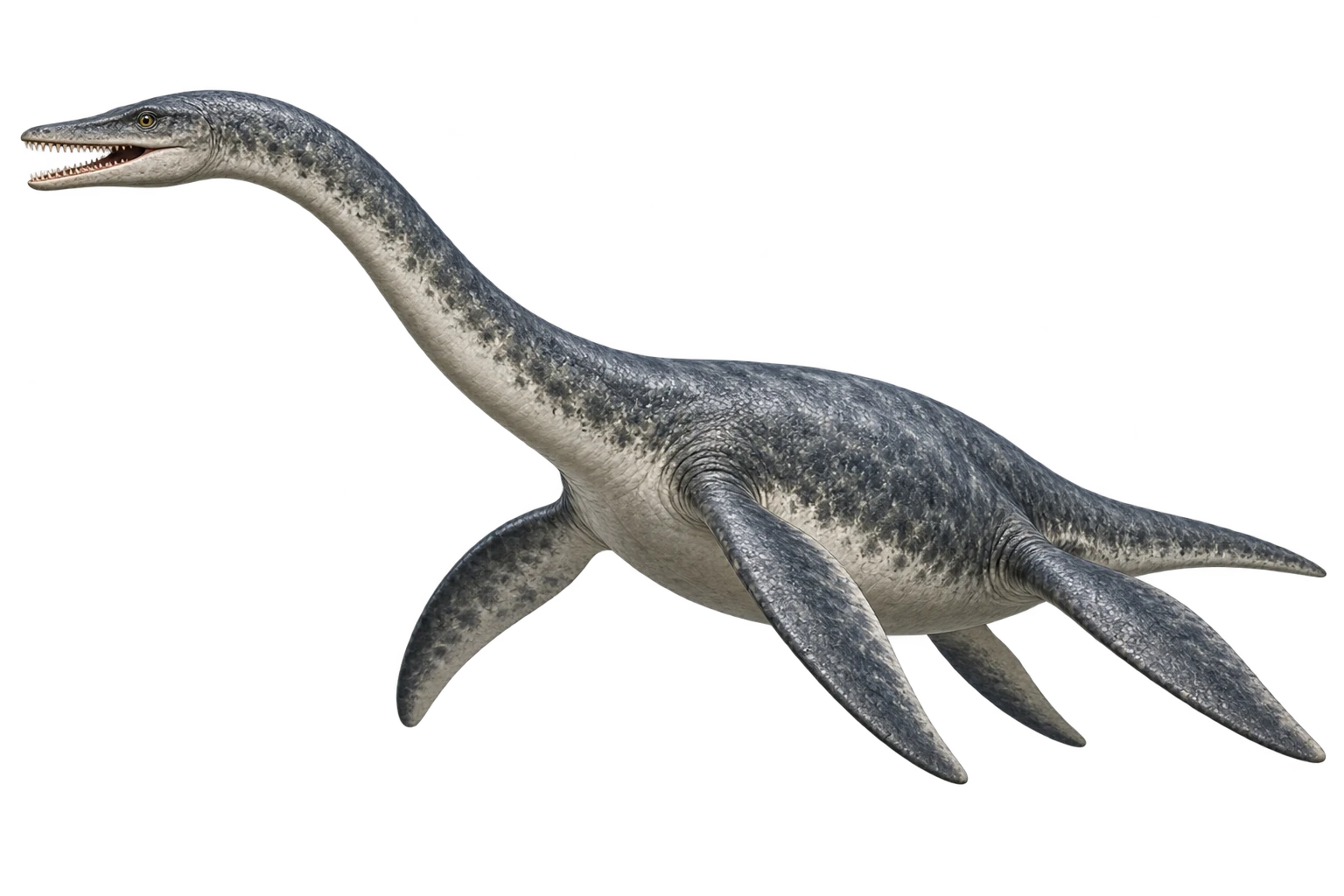
Plesiosaurus was a long-necked marine reptile of Jurassic seas. This account focuses on Plesiosaurus dolichodeirus, made famous by the articulated skeleton found by Mary Anning in southern England.
At a glance
- Habitat
- Open ocean
- Diet
- Carnivore
- Food
- Small marine animals.
Classification
- Common name
- Plesiosaurus
- Browse group
- Reptiles
- Scientific name or taxon
- Plesiosaurus
Three things to know
- It had four flipper-like limbs.
- Mary Anning found a famous skeleton in 1823.
- Plesiosaurus is one genus of plesiosaur.
Habitat and range
Fossils from southern England record Plesiosaurus in ancient marine environments. The genus is just one member of the plesiosaur group, which had a much wider geographic and geological range.
Appearance and adaptations
A small head, long neck and compact body were accompanied by four flippers. Those limbs were adapted for propulsion in water. Fossil skeletons preserve the unusual proportions that once puzzled early scientists.
Diet and behaviour
The skull and teeth suggest relatively small prey, including fish and crustaceans. Swimming was powered by the flippers. The famous skeleton found in 1823 helped establish the reality of extinct animals unlike living species.
Sources
Explore reptiles
Browse all reptiles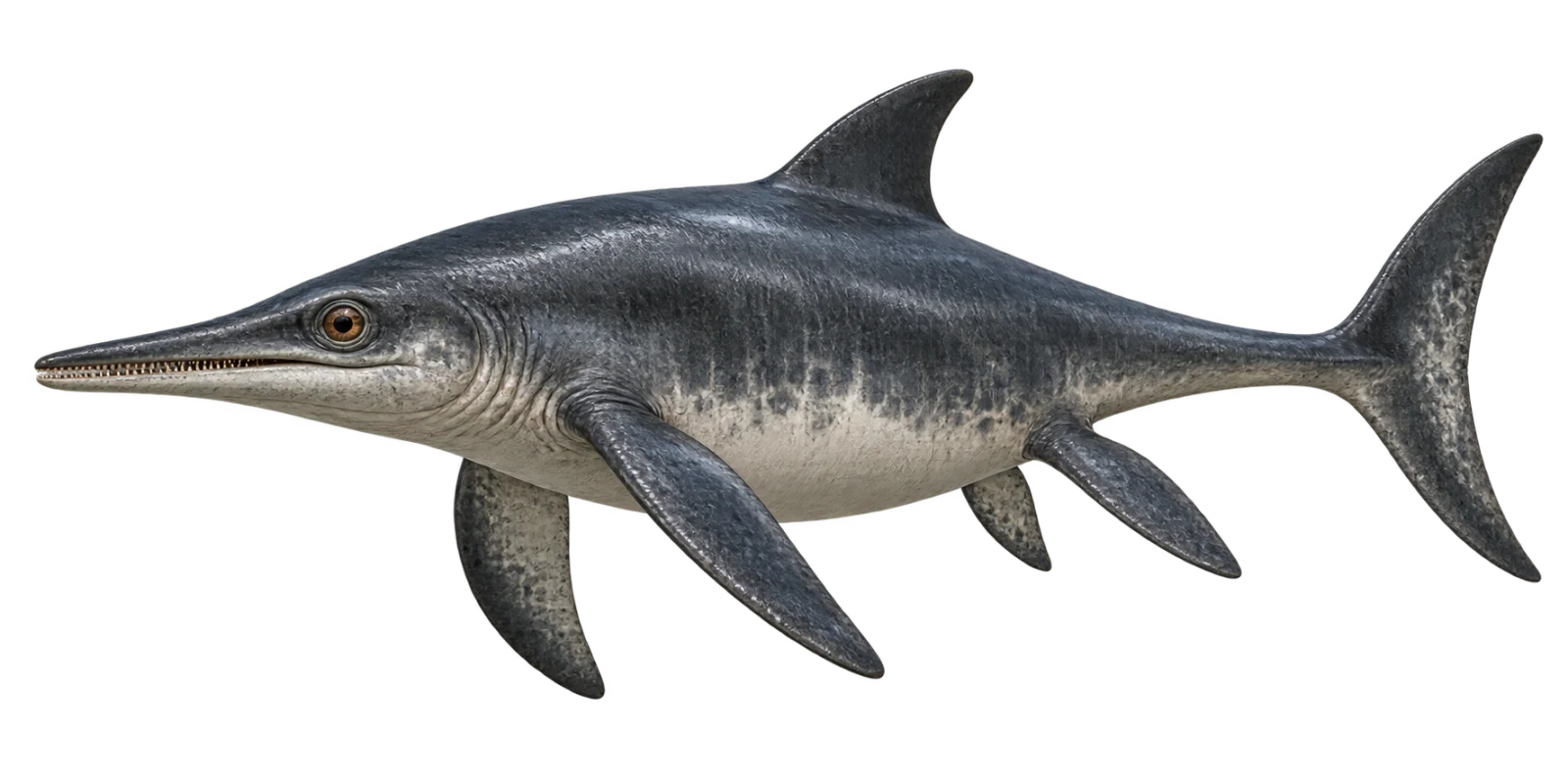
Reptiles
Ichthyosaurus
Ichthyosaurus
Ichthyosaurus was a Jurassic marine reptile with a streamlined body and flipper-like limbs.
ExtinctAI reconstruction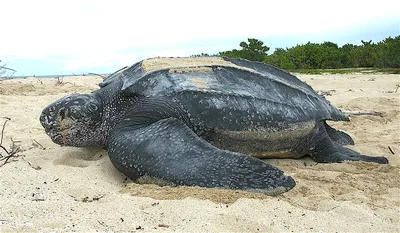
Reptiles
Leatherback Sea Turtle
Dermochelys coriacea
The leatherback is the largest living sea turtle.
Living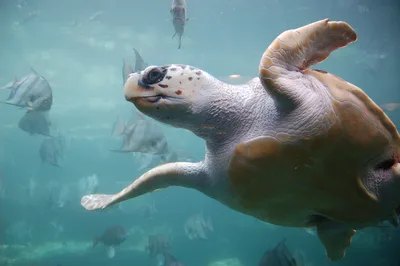
Reptiles
Loggerhead sea turtle
Caretta caretta
The loggerhead sea turtle uses powerful jaws to crush hard-shelled prey.
Living
Reptiles
Mosasaurus
Mosasaurus
Mosasaurus was a large marine reptile of the Late Cretaceous.
ExtinctAI reconstruction