Monitor Lizard
Varanidae
Living individuals or members of this group exist today. This does not mean they are safe from extinction.
Monitor lizards are active foraging reptiles. This account describes the Nile monitor (Varanus niloticus), a large African species equally capable of climbing, swimming and moving on land.
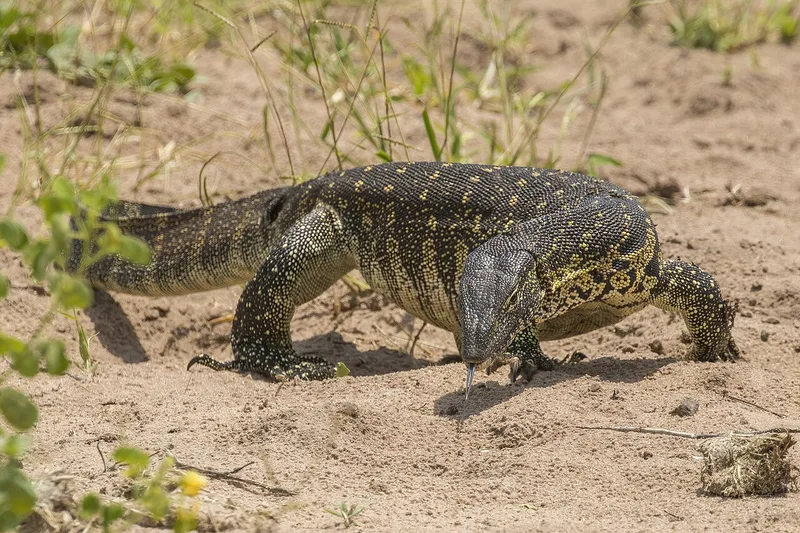
Representative species: Varanus niloticus.
At a glance
- Habitat
- Savanna, Wetlands, Rivers and lakes
- Diet
- Carnivore
- Food
- Animal prey and eggs.
Classification
- Common name
- Monitor Lizard
- Browse group
- Reptiles
- Scientific name or taxon
- Varanidae
- Taxon rank
- family
- Family
- Varanidae
- Source classification
- Reptilia
Taxonomy checked against GBIF. For breeds and hybrids, this describes the listed parent taxon.
Three things to know
- It is a strong swimmer and climber.
- A forked tongue samples chemical cues.
- Adults are usually solitary.
Habitat and range
Nile monitors occupy much of sub-Saharan Africa and extend north along the Nile. Rivers, lakes, swamps and other waters occur within their varied woodland and savanna habitats.
Appearance and adaptations
A muscular body, strong claws and long tail support several kinds of movement. The forked tongue repeatedly samples chemical information during travel and feeding.
Diet and behaviour
These opportunistic predators eat a wide range of animals and eggs. Usually solitary, they bask or rest near water when inactive. Swimming and climbing provide routes to food and escape cover.
Sources
- Animal Diversity Web: Varanus niloticus
- A–Z Animals: Monitor Lizard · Directory entry
Explore reptiles
Browse all reptiles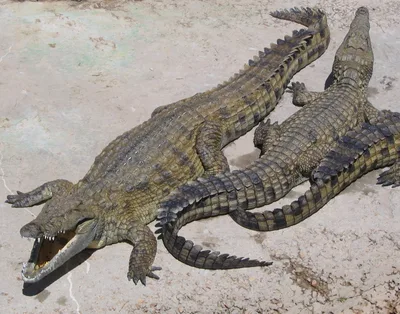
Reptiles
Nile Crocodile
Crocodylus niloticus
The Nile crocodile is a large African crocodilian that hunts in and around water.
Living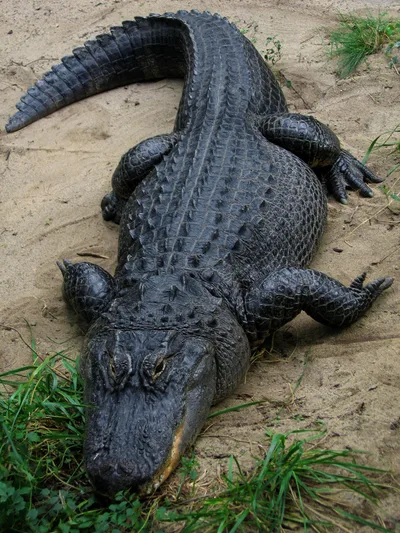
Reptiles
American Alligator
Alligator mississippiensis
The American alligator is a freshwater crocodilian of the southeastern United States.
Living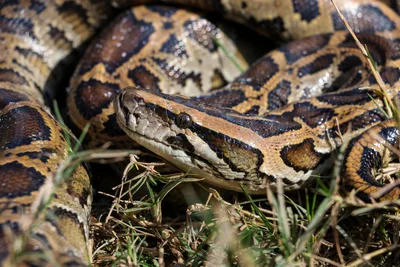
Reptiles
Burmese Python
Python bivittatus
The Burmese python is a large Asian constrictor with dark blotches.
Living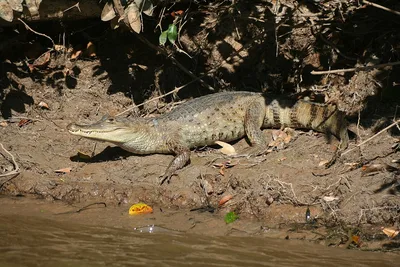
Reptiles
Caiman
Alligatoridae (caimans: subfamily Caimaninae)
Caimans are crocodilians of the Americas.
Living