Louse
Phthiraptera
Living individuals or members of this group exist today. This does not mean they are safe from extinction.
Lice are small parasitic insects. This account follows the human louse (Pediculus humanus), whose head and body forms depend closely on human hosts.
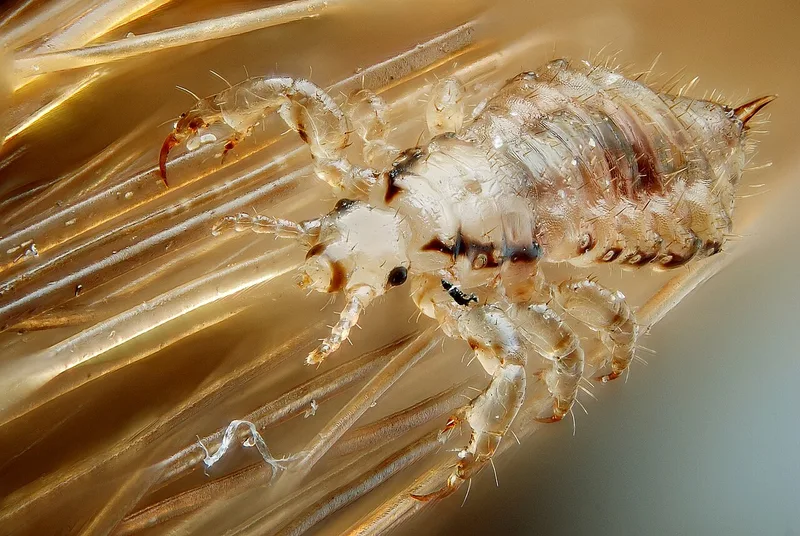
Magnified photograph of Pediculus humanus, the representative described here.
At a glance
- Location
- Human lice occur worldwide.
- Habitat
- Towns and cities
- Diet
- Carnivore
- Food
- These lice feed on human blood.
Classification
- Common name
- Louse
- Browse group
- Insects
- Scientific name or taxon
- Phthiraptera
Three things to know
- They are wingless insects.
- Gripping claws hold hair or fibres.
- Their food is human blood.
Habitat and range
Human lice occur worldwide. Head lice remain among scalp hairs, while body lice live mainly in clothing close to the skin and move onto the host to feed.
Appearance and adaptations
A flattened, wingless body carries six legs with strong gripping claws. Piercing mouthparts obtain blood, and eggs are attached to hair or clothing according to the form.
Diet and behaviour
These lice feed on human blood. Crawling rather than jumping provides movement between suitable surfaces. The head and body forms differ chiefly in where they live on or around their host.
Sources
- Animal Diversity Web: Pediculus humanus
- GBIF: Louse · Directory entry
Explore insects
Browse all insects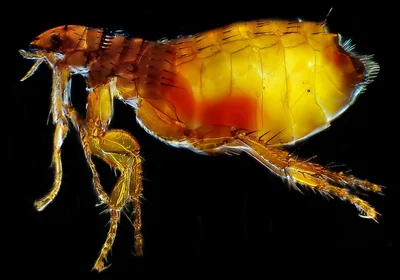
Insects
Flea
Siphonaptera
Fleas are wingless parasitic insects.
Living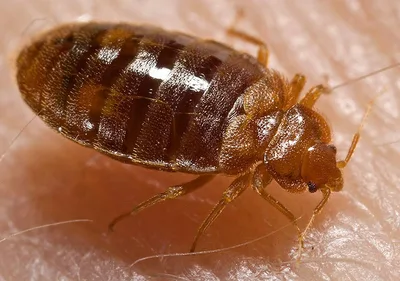
Insects
Bed Bugs
Cimex lectularius
The common bed bug is a small wingless insect that hides in sheltered cracks near sleeping hosts.
Living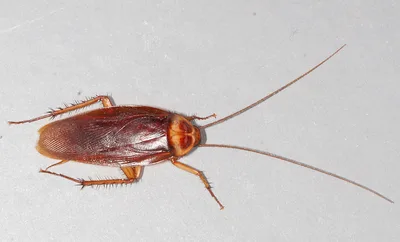
Insects
Cockroach
Blattodea
Cockroaches occupy many environments.
Living
Insects
Fruit Fly
Drosophila melanogaster
The common fruit fly is a small, widely transported insect associated with fermenting fruit.
Living