Humboldt Squid
Dosidicus gigas
Living individuals or members of this group exist today. This does not mean they are safe from extinction.
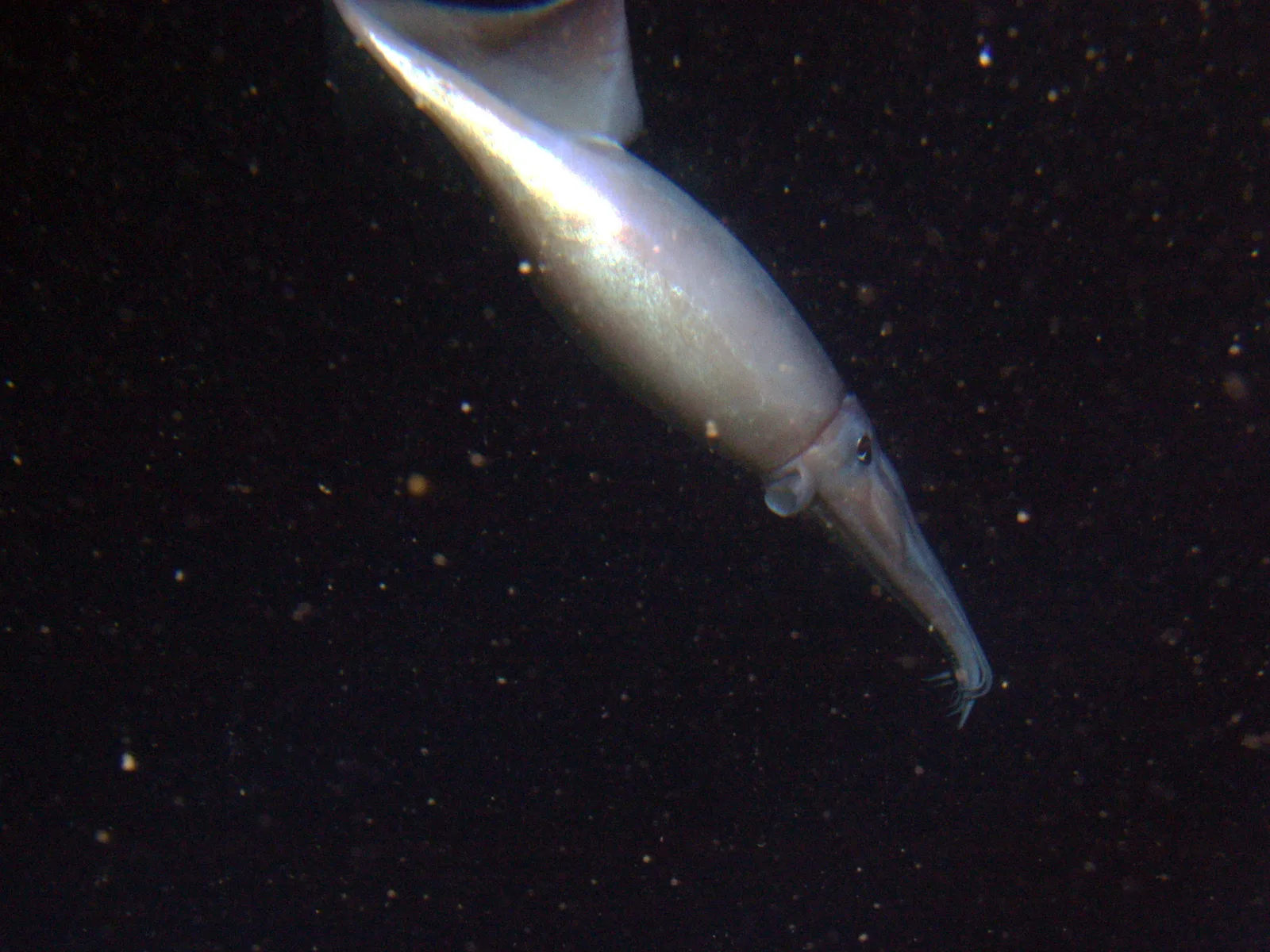
The Humboldt squid is an active predator of the eastern Pacific. It moves between deeper daytime waters and shallower nighttime feeding areas.
At a glance
- Location
- The eastern Pacific Ocean, with daily movement between deep and near-surface waters.
- Habitat
- Open ocean
- Diet
- Carnivore
- Food
- Fish, crustaceans and other cephalopods.
Classification
- Common name
- Humboldt Squid
- Browse group
- Molluscs
- Scientific name or taxon
- Dosidicus gigas
- Taxon rank
- species
- Order
- Oegopsida
- Family
- Ommastrephidae
- Genus
- Dosidicus
- Source classification
- Cephalopoda
Taxonomy checked against GBIF. For breeds and hybrids, this describes the listed parent taxon.
Three things to know
- It changes depth between day and night.
- Pigment cells allow rapid colour changes.
- It can feed on other squid.
Habitat and range
The eastern Pacific Ocean, with daily movement between deep and near-surface waters.
Appearance and adaptations
It has a muscular mantle, grasping appendages and a strong beak. Pigment cells allow rapid changes in the skin pattern.
Diet and behaviour
Adults pursue fish and other cephalopods. Young squid take smaller planktonic prey. Movements through the water column often follow the nightly movements of food.
Sources
- Animal Diversity Web: Dosidicus gigas
- A–Z Animals: Humboldt Squid · Directory entry
Explore molluscs
Browse all molluscs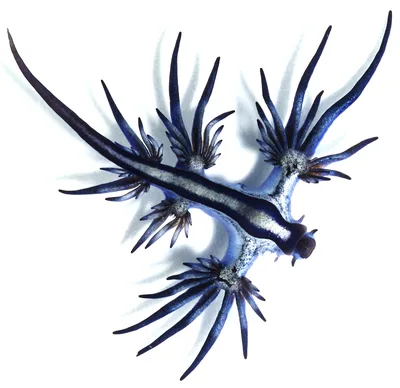
Molluscs
Blue Dragon Sea Slug
Glaucus atlanticus
The blue dragon sea slug floats upside down at the ocean surface.
Living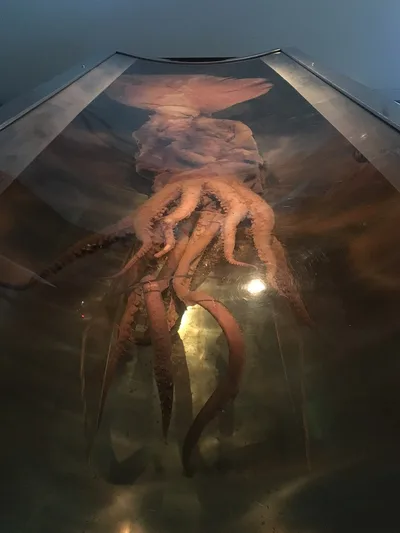
Molluscs
Colossal Squid
Mesonychoteuthis hamiltoni
The colossal squid is a deep-water cephalopod of Antarctic and subantarctic seas.
Living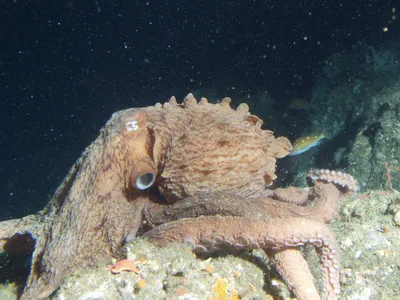 LC
Molluscs
Giant Pacific octopus
Enteroctopus dofleini
The giant Pacific octopus is the largest octopus.
Living
Molluscs
Giant squid
Architeuthis dux
The giant squid is an elusive deep-water cephalopod with exceptionally long feeding tentacles.
Living