Discus
Symphysodon
Living individuals or members of this group exist today. This does not mean they are safe from extinction.
Discus are deep-bodied South American cichlids familiar in aquariums. This account follows the blue discus, a schooling fish of the Amazon system that uses submerged roots and rocky shelter.
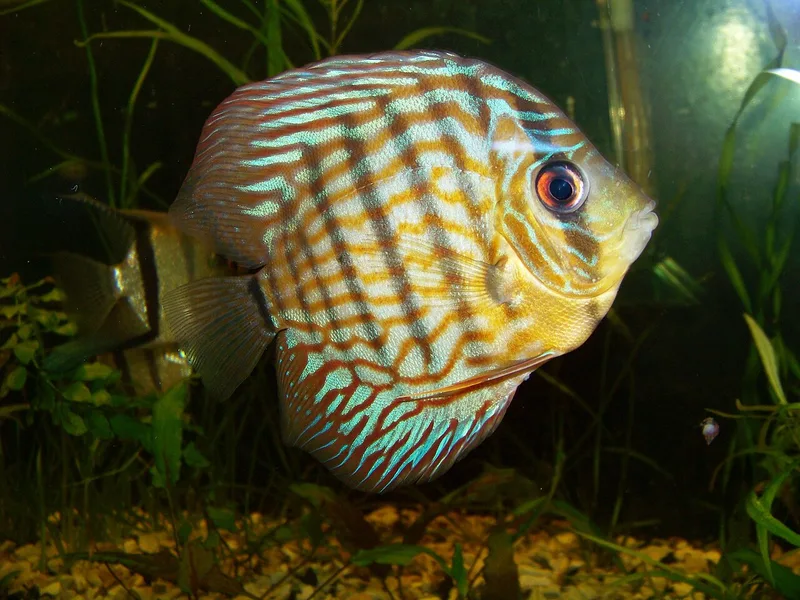
Blue discus (Symphysodon aequifasciatus) photographed in an aquarium.
At a glance
- Location
- Symphysodon aequifasciatus is the representative described here, following FishBase's species treatment. It occurs in the eastern Amazon and lower tributaries. Deep sheltered places among roots and rocks provide habitat.
- Habitat
- Rivers and lakes
- Diet
- Carnivore
- Food
- Insects, insect larvae and other small invertebrates supply food in the cited account.
Classification
- Common name
- Discus
- Browse group
- Fish
- Scientific name or taxon
- Symphysodon
- Source classification
- Actinopterygii
Three things to know
- Its body is strongly compressed.
- Fish usually gather in schools.
- Breeding animals become territorial.
Habitat and range
Symphysodon aequifasciatus is the representative described here, following FishBase's species treatment. It occurs in the eastern Amazon and lower tributaries. Deep sheltered places among roots and rocks provide habitat.
Appearance and adaptations
A strongly compressed, rounded body gives discus their common name. This account concerns the wild blue discus rather than assigning the colours of selectively bred aquarium strains to all wild populations.
Diet and behaviour
Insects, insect larvae and other small invertebrates supply food in the cited account. Fish normally gather in schools but defend breeding areas. Their behaviour therefore changes with reproductive condition.
Sources
- FishBase: Symphysodon aequifasciatus
- A–Z Animals: Discus · Directory entry
Explore fish
Browse all fish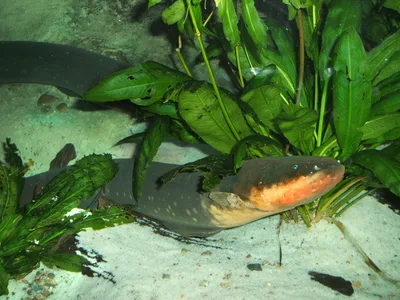
Fish
Electric Eel
Electrophorus electricus
The electric eel is a South American freshwater fish that generates electrical signals.
Living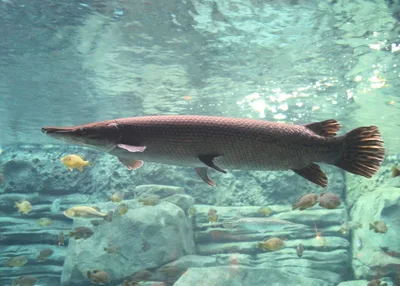
Fish
Alligator Gar
Atractosteus spatula
The alligator gar is a large North American fish with a broad, tooth-filled snout.
Living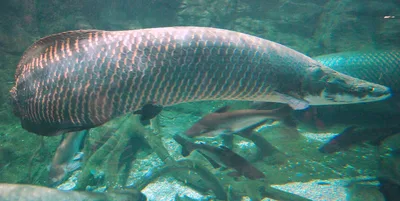
Fish
Arapaima
Arapaima
Arapaimas are large South American freshwater fishes.
Living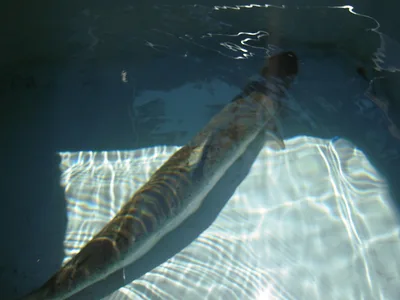 NT
Fish
Atlantic salmon
Salmo salar
The Atlantic salmon hatches in a river, grows up at sea, and returns to the same river to spawn.
Living