Black Aphids
Aphididae
Living individuals or members of this group exist today. This does not mean they are safe from extinction.
Black aphids are not a single species. This account follows the black bean aphid group, familiar in British gardens, where dense colonies feed on tender growth of many different plants.
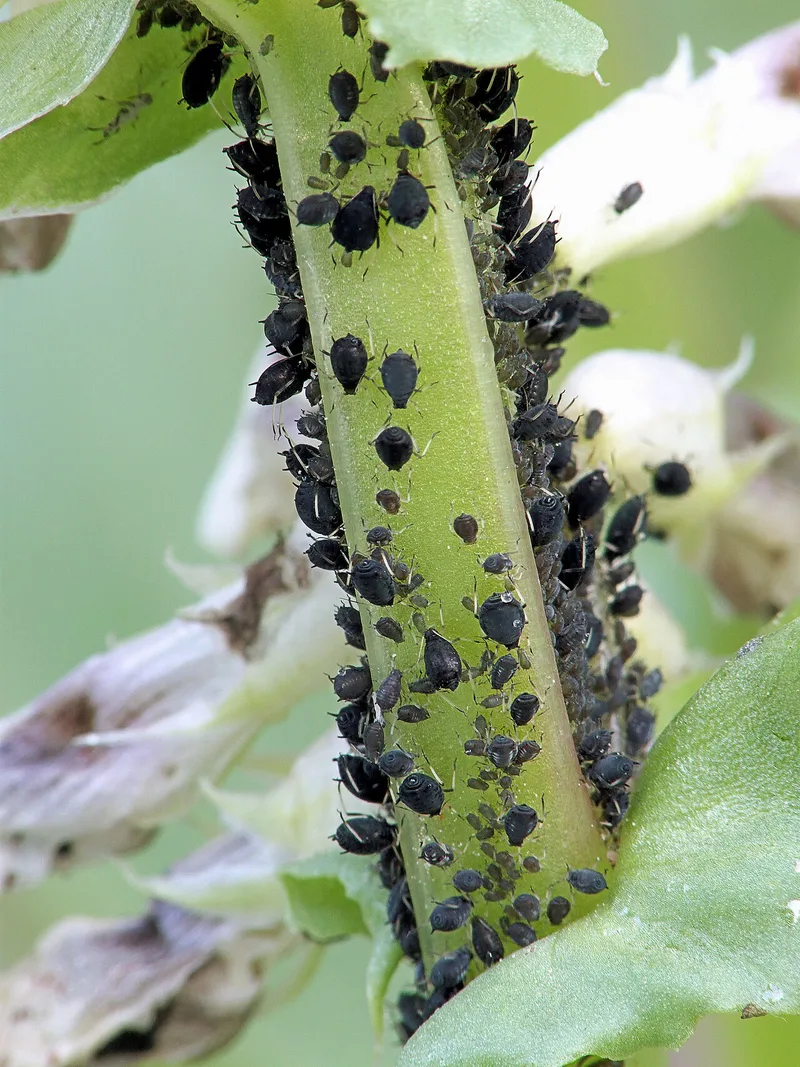
Black bean aphid group (Aphis fabae), the representative described here.
At a glance
- Location
- The representative is the Aphis fabae species group, as treated by the Royal Horticultural Society. This account focuses on British gardens and cultivated plants rather than assigning one global range to every black aphid.
- Habitat
- Towns and cities
- Diet
- Herbivore
- Food
- Aphids draw sap from plants.
Classification
- Common name
- Black Aphids
- Browse group
- Insects
- Scientific name or taxon
- Aphididae
- Taxon rank
- family
- Order
- Hemiptera
- Family
- Aphididae
- Source classification
- Insecta
Taxonomy checked against GBIF. For breeds and hybrids, this describes the listed parent taxon.
Three things to know
- Black aphids include several species.
- They suck plant sap.
- Colour alone is not enough for identification.
Habitat and range
The representative is the Aphis fabae species group, as treated by the Royal Horticultural Society. This account focuses on British gardens and cultivated plants rather than assigning one global range to every black aphid.
Appearance and adaptations
Small dark insects gather around young stems and leaves. Similar-looking black aphids on other hosts can belong to different species, so colour alone does not establish identity.
Diet and behaviour
Aphids draw sap from plants. Colonies can grow densely on soft new growth, and the sticky honeydew they produce can support sooty mould. The source describes seasonal host changes within this aphid group.
Sources
- Royal Horticultural Society: Black bean aphid
- A–Z Animals: Black Aphids · Directory entry
Explore insects
Browse all insects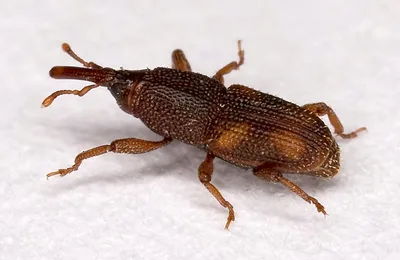
Insects
Weevil
Curculionoidea
Weevils are beetles with distinctive snouts.
Living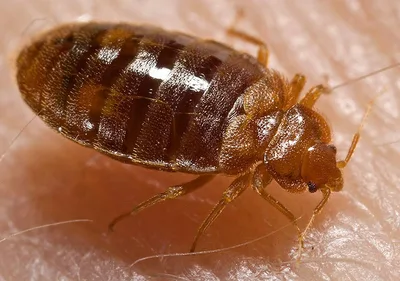
Insects
Bed Bugs
Cimex lectularius
The common bed bug is a small wingless insect that hides in sheltered cracks near sleeping hosts.
Living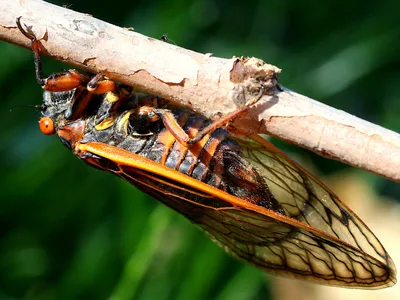
Insects
Cicada
Cicadidae
Cicadas include annual and periodical species.
Living
Insects
Cockroach
Blattodea
Cockroaches occupy many environments.
Living