Snail
Gastropoda
Living individuals or members of this group exist today. This does not mean they are safe from extinction.
Snails occupy many environments. This account follows the garden snail (Cornu aspersum), an introduced inhabitant of Australian gardens originating from Europe.
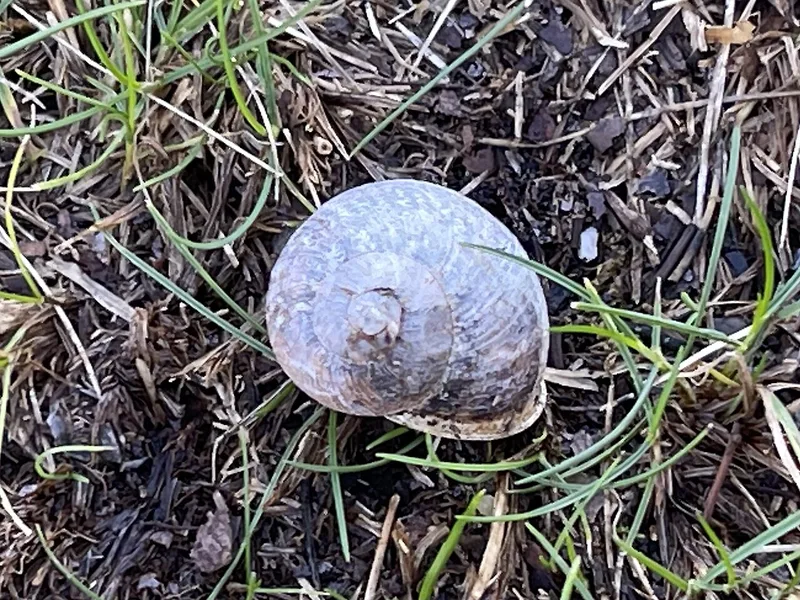
Cornu aspersum, the representative described in this account.
At a glance
- Location
- Garden snails occur in urban gardens and suburbs, often closely associated with people.
- Habitat
- Towns and cities
- Diet
- Herbivore
- Food
- Vegetation supplies much of the diet.
Classification
- Common name
- Snail
- Browse group
- Molluscs
- Scientific name or taxon
- Gastropoda
- Taxon rank
- class
- Source classification
- Gastropoda
Taxonomy checked against GBIF. For breeds and hybrids, this describes the listed parent taxon.
Three things to know
- It carries a coiled shell.
- The head has two tentacle pairs.
- Human transport has spread it widely.
Habitat and range
Garden snails occur in urban gardens and suburbs, often closely associated with people. The Australian Museum account describes their introduction from Europe and their widespread occurrence around cities.
Appearance and adaptations
A coiled shell protects the soft body. Two pairs of head tentacles explore the surroundings, and a broad muscular foot produces gliding movement.
Diet and behaviour
Vegetation supplies much of the diet. Damp conditions favour movement, while the shell and sheltered resting places help reduce water loss when the animal is inactive.
Sources
Explore molluscs
Browse all molluscs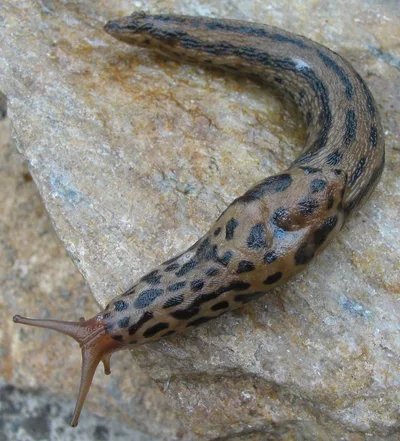
Molluscs
Slug
Stylommatophora
Slugs are snails with reduced or absent external shells.
Living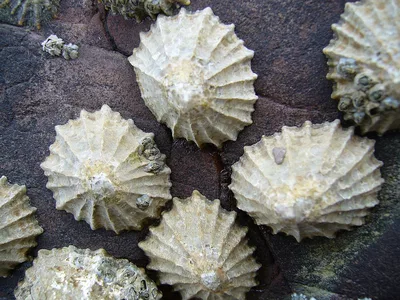
Molluscs
Limpet
Gastropoda
Limpets include several groups of marine snails.
Living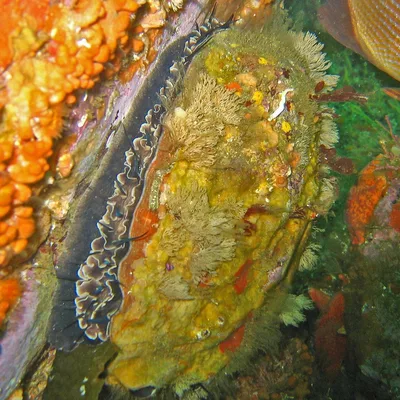
Molluscs
Abalone
Haliotis
Abalones are marine snails with broad muscular feet and flattened shells.
Living
Molluscs
Blue mussel
Mytilus edulis
The blue mussel is a coastal bivalve that forms dense beds on suitable surfaces.
Living