Scorpion
Scorpiones
Living individuals or members of this group exist today. This does not mean they are safe from extinction.
Scorpions are predatory arachnids. This account describes the giant desert hairy scorpion (Hadrurus arizonensis), which shelters from intense daytime heat underground.
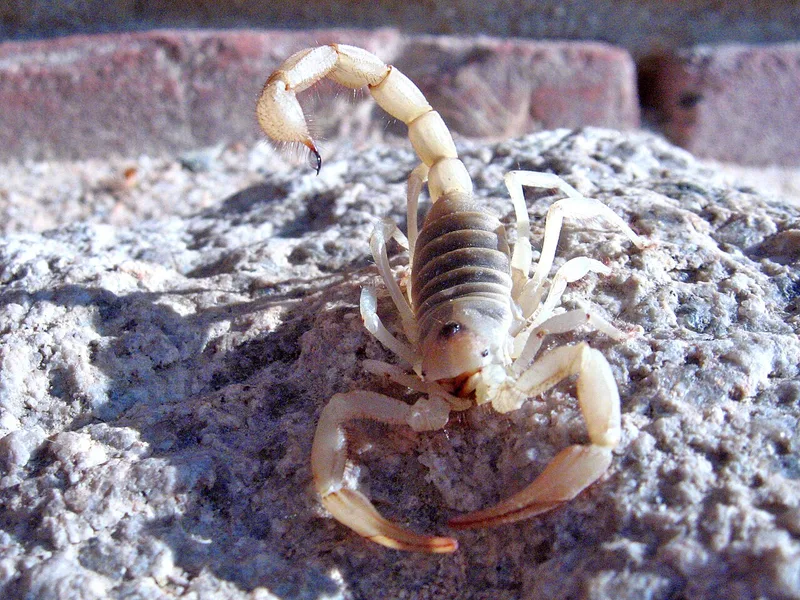
Hadrurus arizonensis, the representative described in this account.
At a glance
- Location
- This scorpion inhabits southwestern North American deserts, especially the Mojave and Sonoran regions.
- Habitat
- Desert
- Diet
- Carnivore
- Food
- Insects, other scorpions and additional small animals provide food.
Classification
- Common name
- Scorpion
- Browse group
- Arachnids
- Scientific name or taxon
- Scorpiones
- Taxon rank
- order
- Order
- Scorpiones
- Source classification
- Arachnida
Taxonomy checked against GBIF. For breeds and hybrids, this describes the listed parent taxon.
Three things to know
- It is an arachnid.
- It shelters from daytime heat.
- Most hunting occurs at night.
Habitat and range
This scorpion inhabits southwestern North American deserts, especially the Mojave and Sonoran regions. Burrows, crevices and rocks provide cooler protected retreats.
Appearance and adaptations
Large pincers grasp prey ahead of the body. Fine hairs cover parts of the animal, and a curved tail ends in the venom-bearing sting.
Diet and behaviour
Insects, other scorpions and additional small animals provide food. Most activity occurs at night, while daylight hours are usually spent in shelter. Pincers and the sting assist in subduing prey.
Sources
- Animal Diversity Web: Hadrurus arizonensis
- A–Z Animals: Scorpion · Directory entry
Explore arachnids
Browse all arachnids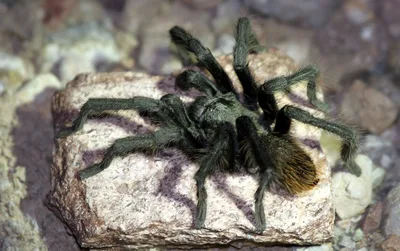
Arachnids
Tarantula
Theraphosidae
Tarantulas are large, hairy spiders.
Living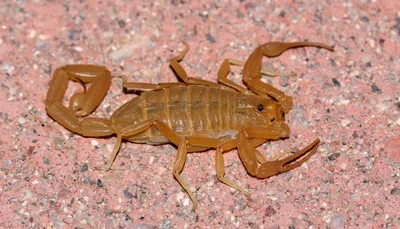
Arachnids
Arizona Bark Scorpion
Centruroides sculpturatus
The Arizona bark scorpion is a climbing arachnid of the Sonoran Desert.
Living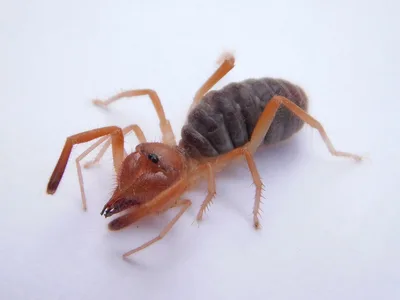
Arachnids
Camel Spider
Solifugae
Camel spiders are fast-running arachnids of the order Solifugae.
Living
Arachnids
Black Widow Spider
Latrodectus
Black widows include several related spiders.
Living