Chameleon
Chamaeleonidae
Living individuals or members of this group exist today. This does not mean they are safe from extinction.
Chameleons are climbing lizards with specialized prey-catching tongues. This account describes the veiled chameleon (Chamaeleo calyptratus), rather than the entire family.
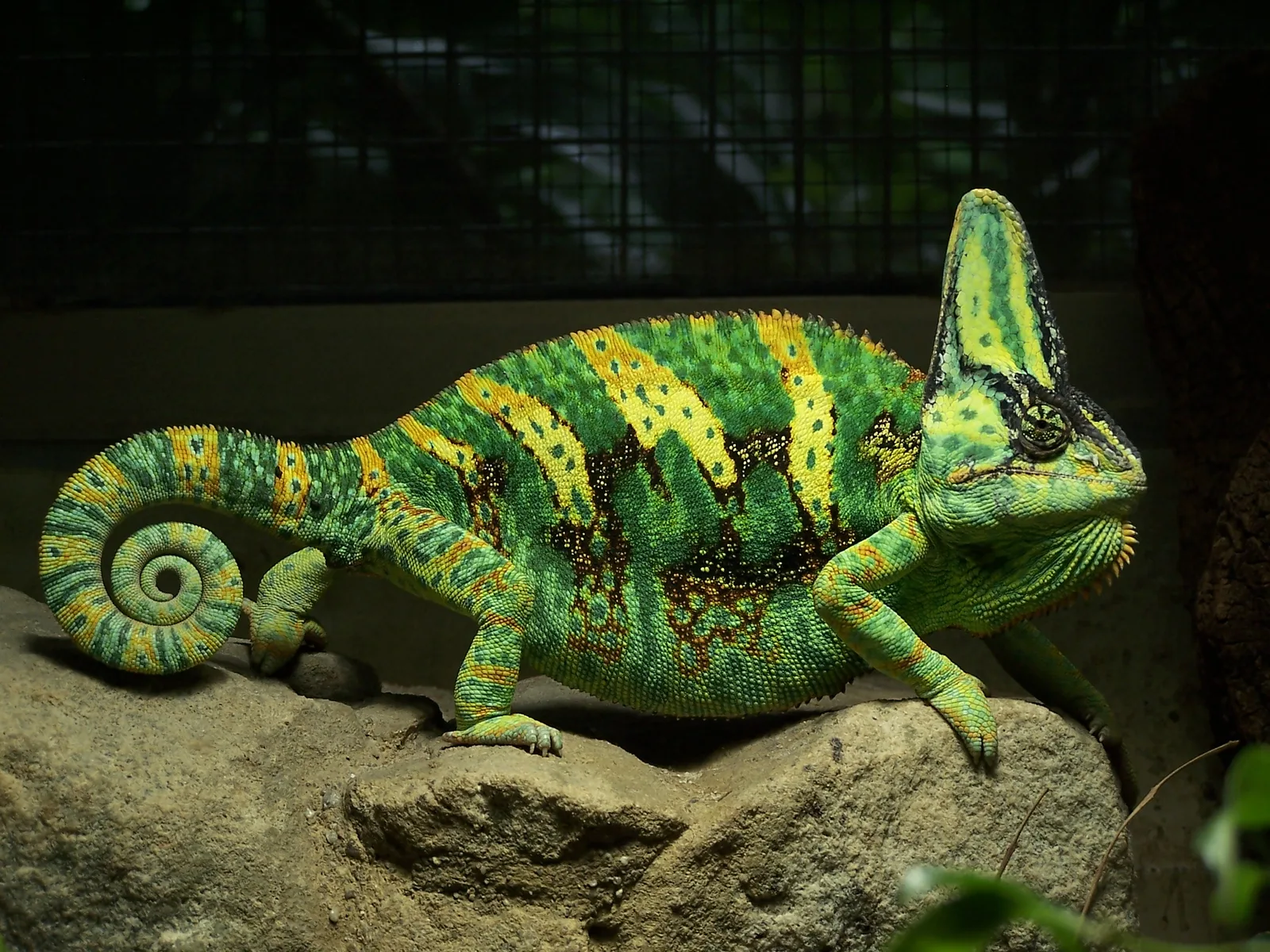
Representative species: Chamaeleo calyptratus.
At a glance
- Location
- Veiled chameleons inhabit trees and shrubs in Yemen and southwestern Saudi Arabia, including dry valleys and mountain slopes.
- Habitat
- Desert, Mountains
- Diet
- Insectivore
- Food
- Insects make up most of the diet; leaves are also eaten.
Classification
- Common name
- Chameleon
- Browse group
- Reptiles
- Scientific name or taxon
- Chamaeleonidae
- Taxon rank
- family
- Family
- Chamaeleonidae
- Source classification
- Reptilia
Taxonomy checked against GBIF. For breeds and hybrids, this describes the listed parent taxon.
Three things to know
- A raised casque crowns its head.
- Its sticky tongue catches insects.
- Males usually have larger casques than females.
Habitat and range
Veiled chameleons inhabit trees and shrubs in Yemen and southwestern Saudi Arabia, including dry valleys and mountain slopes.
Appearance and adaptations
A tall head crest and bands of green, yellow and other colours distinguish this species. Males are larger than females.
Diet and behaviour
Insects make up most of the diet; leaves are also eaten. It projects its tongue at prey from a perch. Adults can be territorial and generally live apart, coming together to breed.
Sources
- Animal Diversity Web: Chamaeleo calyptratus
- A–Z Animals: Chameleon · Directory entry
Explore reptiles
Browse all reptiles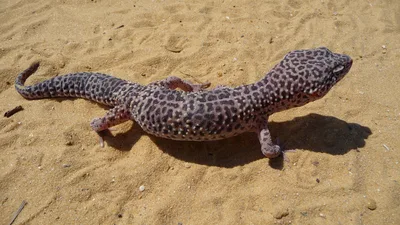
Reptiles
Leopard Gecko
Eublepharis macularius
The leopard gecko is a ground-dwelling Asian lizard with dark spots and movable eyelids.
Living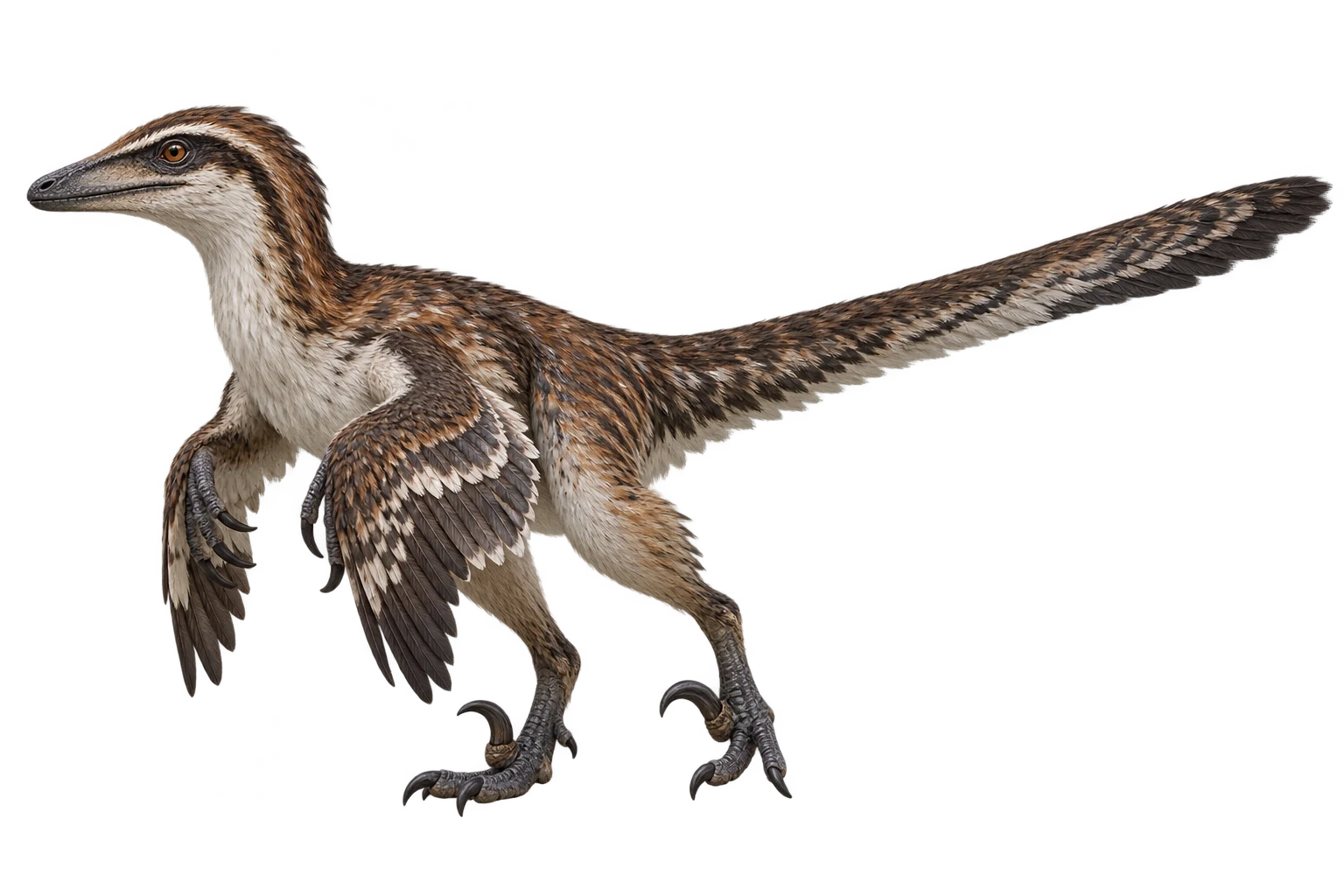
Reptiles
Velociraptor
Velociraptor mongoliensis
Velociraptor mongoliensis was a small feathered predatory dinosaur of Cretaceous Asia.
ExtinctAI reconstruction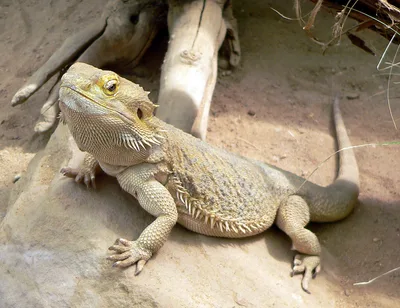
Reptiles
Bearded dragon
Pogona
Bearded dragons are Australian lizards.
Living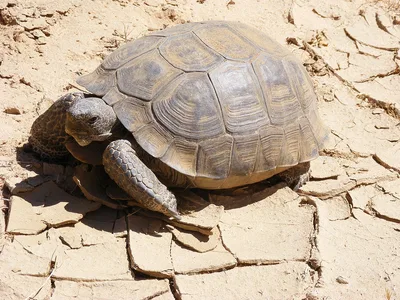
Reptiles
Desert Tortoise
Gopherus agassizii
The Mojave desert tortoise is a burrowing reptile of the southwestern United States.
Living