Catfish
Siluriformes
Living individuals or members of this group exist today. This does not mean they are safe from extinction.
Catfishes include many freshwater and marine species. This account follows the channel catfish, a North American fish with a forked tail and sensitive barbels around the mouth.
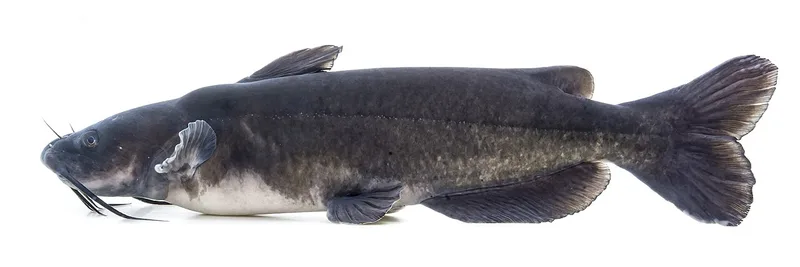
Photographed channel catfish (Ictalurus punctatus) against a plain background.
At a glance
- Location
- The representative is Ictalurus punctatus. It occupies rivers, lakes, reservoirs and ponds in North America, using deeper holes and other cover during the day. Introduced populations also occur beyond its native region.
- Habitat
- Rivers and lakes
- Diet
- Omnivore
- Food
- Channel catfish become more active after dusk.
Classification
- Common name
- Catfish
- Browse group
- Fish
- Scientific name or taxon
- Siluriformes
- Source classification
- Actinopterygii
Three things to know
- It has no scales.
- The tail is deeply forked.
- It often feeds after dusk.
Habitat and range
The representative is Ictalurus punctatus. It occupies rivers, lakes, reservoirs and ponds in North America, using deeper holes and other cover during the day. Introduced populations also occur beyond its native region.
Appearance and adaptations
The body lacks scales and is usually darker above than below. A deeply forked tail and dark spotting are useful features. Barbels around the mouth help the fish explore its surroundings.
Diet and behaviour
Channel catfish become more active after dusk. They eat varied animal and plant material, with larger fish often taking more fish prey. Smell and taste help them find food near the bottom.
Sources
- Animal Diversity Web: Ictalurus punctatus
- A–Z Animals: Catfish · Directory entry
Explore fish
Browse all fish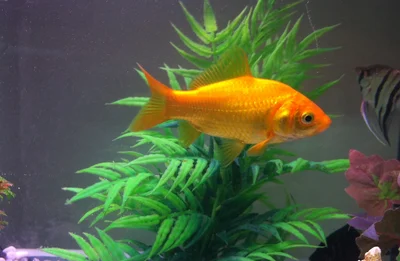
Fish
Goldfish
Carassius auratus
The goldfish is a domesticated freshwater fish with many selectively bred forms.
Living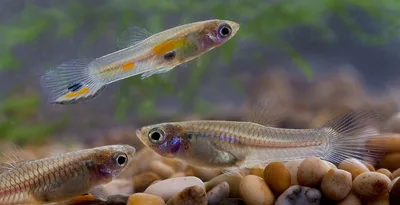
Fish
Guppy
Poecilia reticulata
The guppy is a small freshwater fish widely bred for aquariums.
Living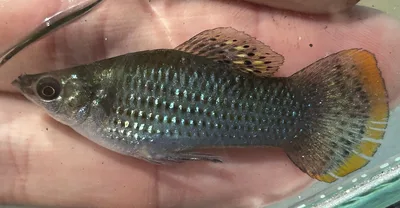
Fish
Molly
Poecilia sphenops
The molly is a small fish familiar from aquarium strains, especially black varieties.
Living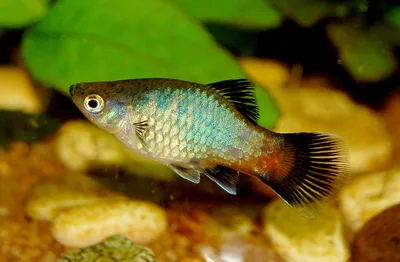
Fish
Platy
Xiphophorus maculatus
Platies are small freshwater aquarium fishes with many cultivated colours.
Living