Brittle star
Ophiuroidea
Living individuals or members of this group exist today. This does not mean they are safe from extinction.
Brittle stars have a central disc and long flexible arms. This account follows the common brittle star, a seabed animal that raises its arms to collect suspended food from moving water.
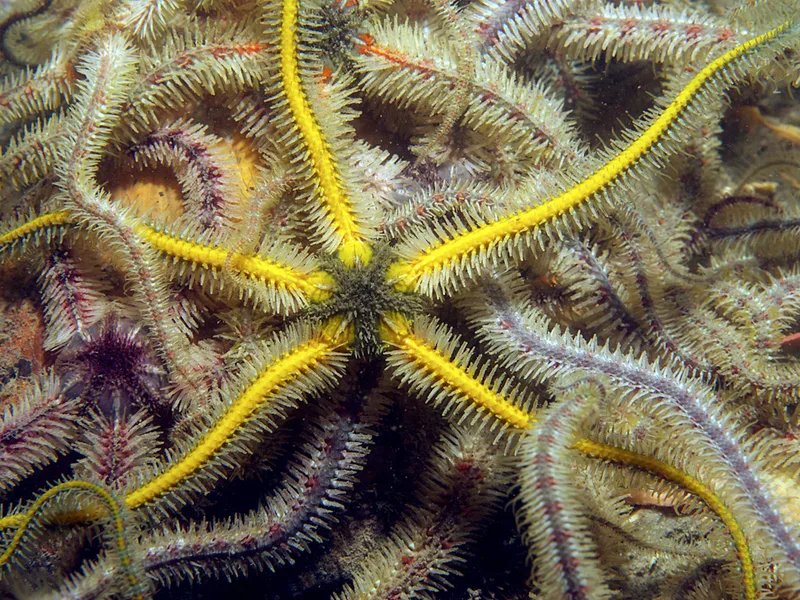
Common brittle star (Ophiothrix fragilis), the representative described here.
At a glance
- Location
- Ophiothrix fragilis is the representative described here. It occupies eastern Atlantic and neighbouring coastal waters. Rocky and mixed seabeds provide crevices, and strong currents carry food past the animals.
- Habitat
- Coast
- Diet
- Filter feeder
- Food
- Detritus, diatoms and other planktonic material supply food.
Classification
- Common name
- Brittle star
- Browse group
- Brittle stars
- Scientific name or taxon
- Ophiuroidea
- Taxon rank
- class
- Source classification
- Ophiuroidea
Taxonomy checked against GBIF. For breeds and hybrids, this describes the listed parent taxon.
Three things to know
- It has five slender arms.
- Its colour varies considerably.
- It can form dense seabed aggregations.
Habitat and range
Ophiothrix fragilis is the representative described here. It occupies eastern Atlantic and neighbouring coastal waters. Rocky and mixed seabeds provide crevices, and strong currents carry food past the animals.
Appearance and adaptations
Five long slender arms radiate from a small central disc. Spines cover the arms, while colours and patterns vary considerably. Dense groups can form extensive brittle-star beds.
Diet and behaviour
Detritus, diatoms and other planktonic material supply food. Raised arms pass collected particles towards the mouth. Animals often hide by day and become more exposed while feeding at night.
Sources
- Animal Diversity Web: Ophiothrix fragilis
- GBIF: Brittle star · Directory entry
Explore brittle stars
Browse all brittle stars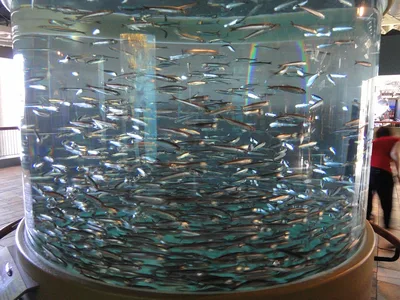
Fish
Anchovy
Engraulidae
Anchovies are small schooling fishes.
Living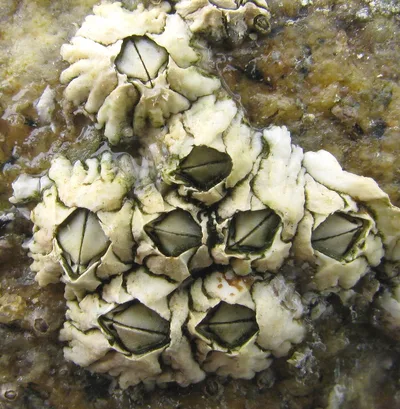
Crustaceans
Barnacle
Cirripedia
Barnacles are crustaceans whose adults are fixed in place.
Living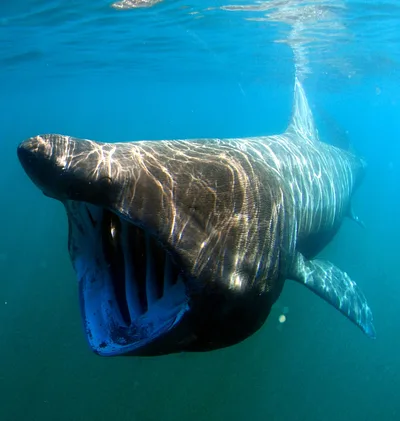
Fish
Basking Shark
Cetorhinus maximus
The basking shark is a very large fish that gathers small plankton rather than chasing large prey.
Living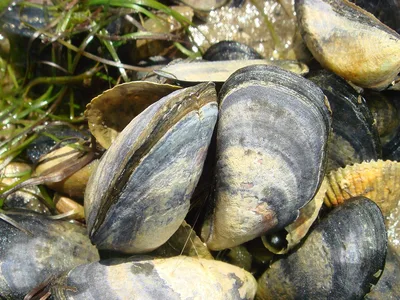
Molluscs
Blue mussel
Mytilus edulis
The blue mussel is a coastal bivalve that forms dense beds on suitable surfaces.
Living